News & Insights
What's Happening In Greater Western Sydney
About the South West Sydney region
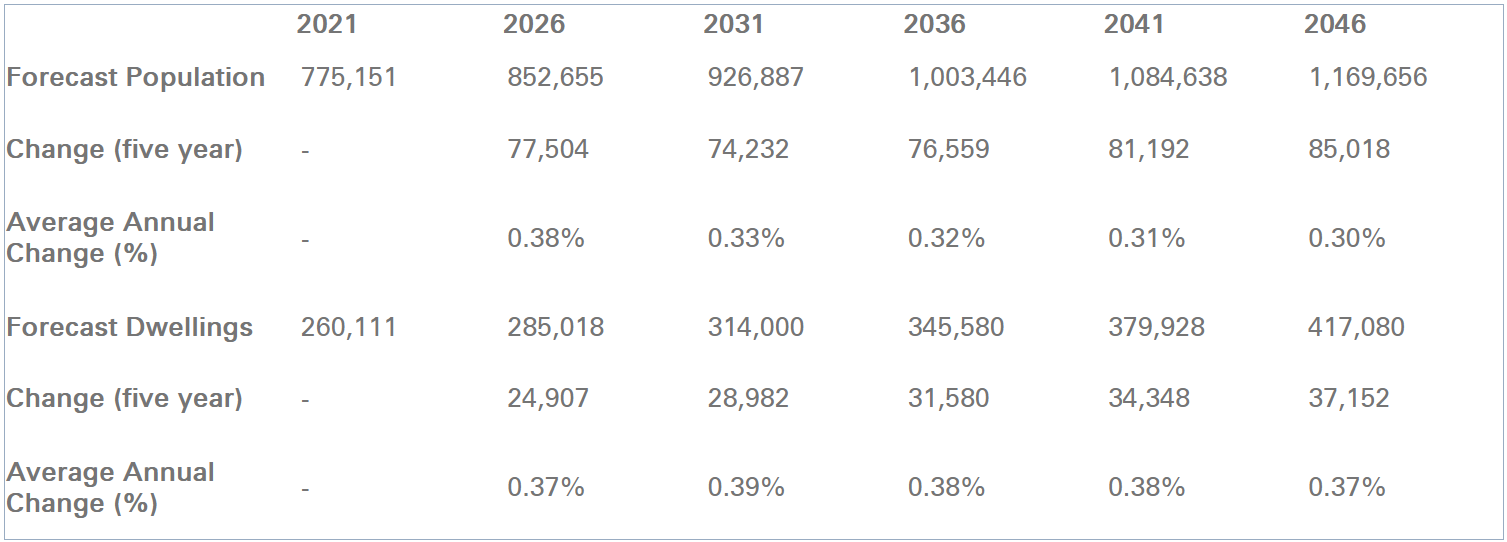
The Sydney South West region comprises two SA4s, Sydney - South West and Sydney - Outer South West. This region is forecast to provide 16% of New South Wales' population growth between 2021 and 2046.
The South West SA4 contains established suburbs, major centres such as Fairfield and Liverpool and major urban growth areas. It is a significant source of Sydney's fringe housing supply. The region also contains the site of the Western Sydney Airport, under construction at Badgerys Creek. The Aerotropolis around the airport is expected to be a major source of new housing and employment supported by major road and rail infrastructure.
The Outer South West SA4 contains the urban centre of Campbelltown and the Greater Macarthur Growth Area. Greater Macarthur is a growth area incorporating the Glenfield to Macarthur urban renewal precincts and the land release precincts to the south, including Gilead, and further south, the growth areas around Appin and Wilton. These growth precincts will be key future growth fronts in the future.
South West
Over the forecast period, the Sydney - South West SA4 is set to grow from 476,000 people in 2021 to around 720,000 in 2046, a growth of 55% in the period. Growth in the SA4 is dominated by two SA2s - Austral - Greendale and Leppington - Catherine Field. Considerable growth is also expected in the SA2s of Cobbitty - Bringelly and Oran Park.
The Austral - Greendale SA2 contains significant greenfield growth in the Austral and Leppington North precincts, as well as the Bradfield City Centre which will be built as part of the Aerotropolis and serviced by the new metro railway line. Leppington - Catherine Field's growth will be driven by greenfield and apartment growth in the Leppington Town Centre and development in the Catherine Field precinct. Areas in Oran Park and Cobbitty - Bringelly will be driven by substantial urban expansion, including precincts such as Pondicherry and Lowes Creek Maryland. In total, these four growth area SA2s are forecast to grow by over 200,000 people to 2046.
Edmondson Park is also expected to continue its recent growth, while of the more established areas in the SA4, Liverpool is expected to grow by around 50% based on the construction of new medium and higher density development.
At the opposite end of the spectrum, some older established areas such as Green Valley, Hinchinbrook and Bossley Park - Abbotsbury are expected to slightly decline in population over the forecast period.
Outer South West
Over the forecast period, the Outer South West SA4 is forecast to grow by approximately 130,000 persons, from a population of around 300,000 in 2021 to 430,000 in 2046. Most areas are expected to add population over the next 25 years, with growth concentrated in the developing areas of Menangle Park, Gilead, North Appin and Appin. Additionally, there is significant growth in the established areas Campbelltown, Glenfield and Ingleburn, with the development of underutilised sites and densification.
The largest growth in population will occur in the Rosemeadow - Glen Alpine SA2, with the development of Menangle and Gilead. The population is expected to grow by approximately 42,000 over the forecast period. Development capacity identified within this SA2 is expected to be significantly utilised over the period, with about 76% of the identified capacity being developed. The SA2 of Douglas Park - Appin, containing the growth precincts of Appin and North Appin, is expected to grow by 37,000 persons over the period. These growth fronts will continue to add significant housing stock beyond the forecast period, with only 30% of capacity used.
Glenfield, in the north of Campbelltown, will experience growth with the development of part of the Hurlstone Agricultural High School and densification of surrounding areas. It is forecast to increase in population by 11,000 persons to a population of approximately 21,000 by 2046. Similarly, Campbelltown will experience a growth of 9,000 persons as it undergoes densification.
In contrast the areas of the SA4 that fall in Camden have limited capacity for growth having recently completed their development phase. As such, they will have minimal population change and, in the case of Harrington Park, will experience population loss as the population ages.
Forecast results
The following forecast information presents the combined numbers for Sydney - South West and Sydney - Outer South West
Source: www.id.com.au
WSI Terminal Opened
The region took yet another step forward on the path to opening Western Sydney to the world this month with the Prime Minister, Anthony Albanese, opening the airport’s first terminal.
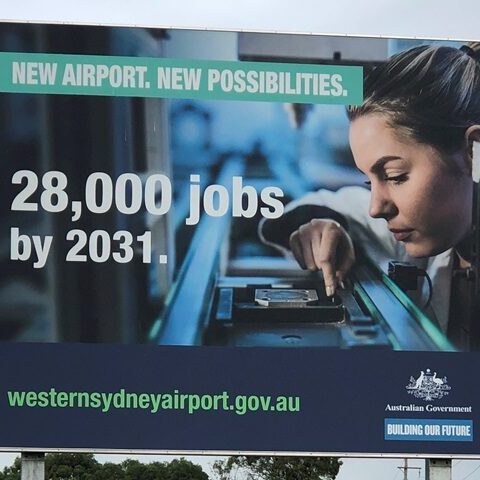
Building the airport and the terminal has powered Western Sydney by creating 12,000 jobs resulting in more than $500m being invested in more than 360 Western Sydney businesses.
This news follows the preliminary flight paths for WSI being released.
This was another important milestone that comes off the back of months of community and industry consultation.
WSI is the nation’s biggest infrastructure investment and one that will deliver enormous economic benefits for the region, create thousands of new jobs and transform the West into a global gateway.
It will be a gamechanger for the region, which is why the Dialogue is spearheading the Take Flight 2026 airport readiness campaign.

“WSI will be ready to cater for up to 10 million passengers a year from day one of operations. To ensure Western Sydney can welcome visitors landing on our doorstep from late next year, we need to leverage the region’s unique characteristics and build on its existing assets and strengths,” Dialogue CEO, Adam Leto said.
“Western Sydney needs to be ready to welcome the world, but we only have a small window of opportunity to get the red carpet ready so that visitors stay, play and spend in the West.”

Source: https://westernsydney.org.au/newsletter/may-2025/#flight
Western Sydney Airport has unveiled what it is calling Australia’s “most Instagrammable terminal”
with the completed building bringing the gateway within 18 months of becoming fully operational.
Spread over the equivalent of 13.5 football fields, the domestic and international terminal marks a major milestone for the $5.3bn airport due to start welcoming passengers late next year.
Key features include the most advanced baggage handling system in the nation, with 5km of contractor belts capable of processing 2000 bags an hour.
The long awaited airport is now open to the public.
The suspended aluminium feature ceiling is the largest of its kind in Australia, spanning more than 208,000m, and the roof and covered walkways are topped with 8848 solar panels.
Eight concrete feature columns support the “great Australian veranda” at the entrance to the terminal, and three “swing gates” allow gate doors to switch between domestic and international security provisions in 30 minutes.

The feature ceiling of Western Sydney Airport is the largest of its kind in Australia. Picture: Trevor Mein
Western Sydney chief executive Simon Hickey said it was a terrific milestone for the team and promised a “fitting welcome” for people arriving into Australia at Badgerys Creek.
“It’ll be something that people remember. There’s plenty of Instagram moments throughout and it’s reflective of our First Nations community in western Sydney,” Mr Hickey said.

An entry to Western Sydney International Airport Terminal
“Certain aspects of the terminal feel more like you’re in an art gallery in terms of the design, it’s so tremendous – there’s lots of natural light and sandstone feature walls throughout that I’m sure people will love to snap and put on their socials when they’re heading off on their journey.”
Anthony Albanese and Transport Minister Catherine King will attend Wednesday’s official opening of the terminal, which more than 2000 people helped to build.
The Prime Minister said “vision, persistence and co-operation had led to this milestone”.
“This airport will drive economic growth and turbocharge productivity,” he said.

Inside the completed Western Sydney Airport terminal. Picture: Trevor Mein
Ms King said the project remained on time and on budget, and would shape greater Sydney for decades to come.
Almost seven years after work began on the site, the airport was taking shape, but Mr Hickey said there was still much to do.
Construction was continuing on the cargo precinct, and Airservices was building a fire station as well as perfecting technology for a digital control tower that would take the place of a traditional high-rise structure.

Ready for takeoff at Western Sydney International Airport Terminal. Supplied by WSIA
Mr Hickey said the latest technology was being incorporated throughout the airport, including in the design of “fast taxiways”.
“We will have a five-minute taxi time from the runway to terminal so you spend less time in the aircraft waiting to take off or getting to the terminal,” he said.
“There’s a whole lot of things that have gone into this terminal which just make it easy and seamless for customers making their way through.”

Sandstone feature walls in the now completed Western Sydney International Airport terminal. Picture: Trevor Mein
To date four airlines have made a firm commitment to operating out of Western Sydney: Singapore Airlines, Air New Zealand, Qantas and Jetstar.
Mr Hickey said he was hopeful Virgin Australia would also sign up, along with more international carriers keen to take advantage of the curfew-free airport.
“We’re talking to a lot of airlines, we were just over at the Routes conference in Perth where we met with over 30 airlines, so there’s plenty of interest,” he said.

The now completed Western Sydney International Airport Terminal. Supplied by WSIA
“We’ve built for 10 million annual passengers, about the size of Adelaide Airport, and the announcements to date take us to nearly half of that already committed at the airport, so in terms of an airport built for growth that’s a really good start.”
Source: https://www.theaustralian.com.au

Information Documents - Airport Plan 2019
Information Documents - Airport Plan 2018
Information Documents - Airport Plan 2017
Information Documents - Airport Plan 2016
Information Documents - Airport Plan 2015
Information Documents - Airport Plan 2014
Information Documents - Airport Plan 2013